
V̇O₂max Test
Maximal oxygen uptake and heart-rate training zones.
Who it suits: Cyclists, runners and triathletes who want a baseline they can train against.
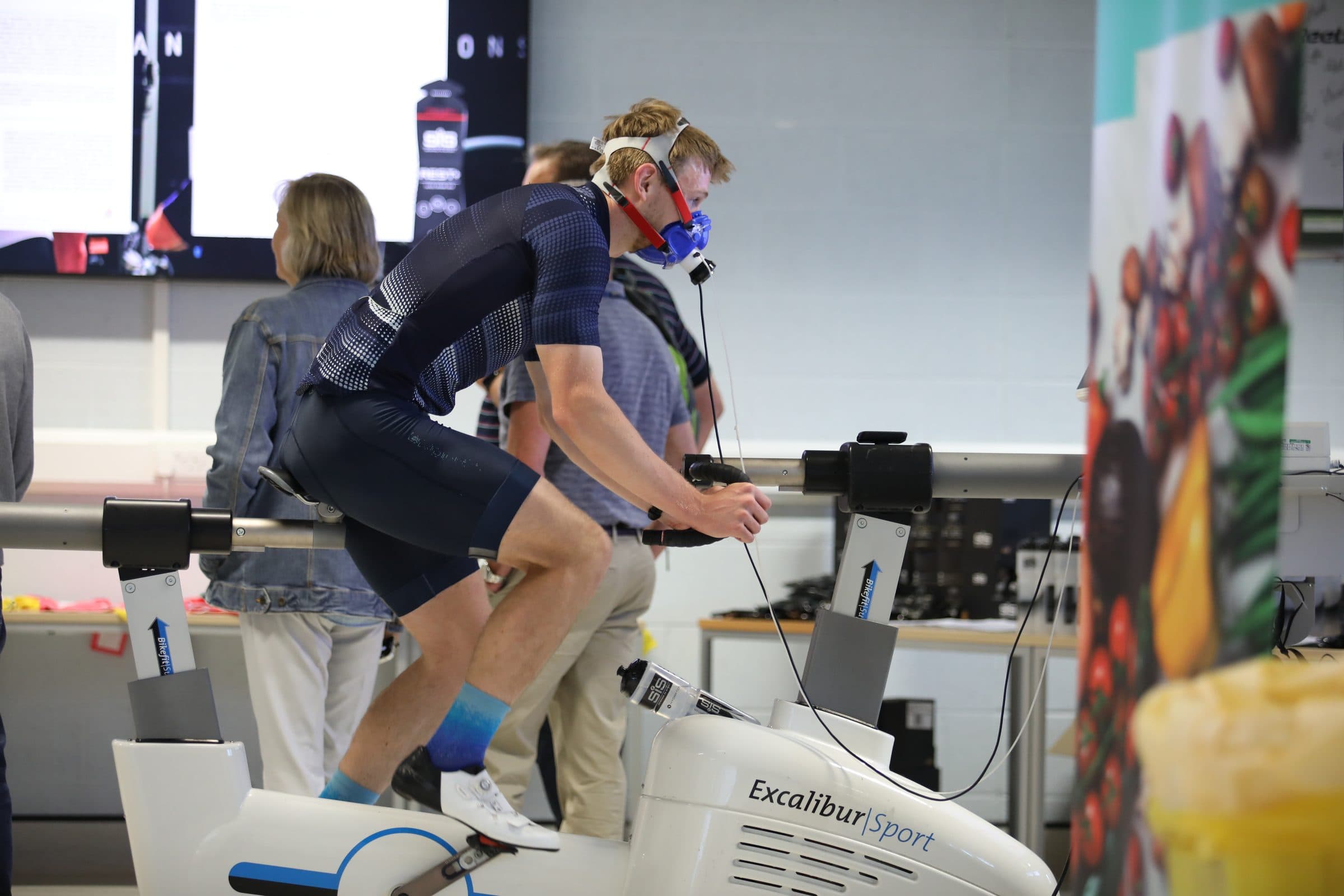
An incremental cycling or running test measures the maximum rate of oxygen uptake during exercise. The report includes your V̇O₂max result, heart-rate training zones and recommendations.
Add to your test when you book.
Extras for the same visit
- Body Composition +£45 (usually
£66)
A seca mBCA 555 scan, done first, before any exercise. - Sweat Test +£55 (usually
£75)
Sweat sodium analysis and a personal hydration plan. - Nutrition Assessment +£85 (usually
£99)
A 3-day food diary in the Libro app, analysed by a SENr nutritionist, with a feedback session we'll arrange with you separately. - 8-week Training Plan +£75
Written from your results by an experienced endurance coach, emailed within a week of your visit.
Choose extras on the first step of booking.
Want training zones set from your thresholds too? The Full Physiological Profile adds blood lactate testing for £70 more.
What's included
- Pre-test consultation
- Incremental cycling or running test to exhaustion
- Personalised heart-rate training zones
- Written report
What your results explain
- V̇O₂max result with age and sex comparisons
- Heart-rate training zones
- Training recommendations
Before your visit
Read what happens on the day, what to wear and how to prepare.
Report
See an example
Open a 4-page sample of the V̇O₂max report.
Open PDFCommon questions
Can I do a VO2 max test on a bike or a treadmill?
Either. The test can be done cycling or running, so choose the one that matches your sport.
How long does a VO2 max test take?
You'll warm up, then ride (or run) at gradually increasing intensities until you can't continue. The whole effort lasts around 12–16 minutes; the full visit is about 45 minutes including prep and a brief debrief.
How much does a VO2 max test cost?
£95 per person, including the test and your written report. Group pricing for clubs and squads starts at £77 per athlete.
How should I prepare for a VO2 max test?
The night before: eat normally. Sleep is more important than carb-loading. On the day: light meal 2–3 hours before. Avoid heavy training in the 24 hours beforehand. Caffeine: fine to have your usual cup — just keep it consistent if you're re-testing later. Hydration: drink to thirst through the day. Bring a water bottle.
What should I wear for a VO2 max test?
Normal cycling kit (bib shorts, jersey, road shoes with cleats) or running kit (shorts, t-shirt, road shoes). Bring a towel and a change of clothes.
What results will I get?
A written report covering V̇O₂max result with age and sex comparisons; heart-rate training zones; training recommendations.
Where is the test carried out?
Performance Hub, Tom Reilly Building, Liverpool John Moores University, Byrom St, Liverpool L3 3AF.